
Blog -The Case for Cagliari: Why Sardinia's Capital is the Mediterranean's Most Compelling Property Bet.
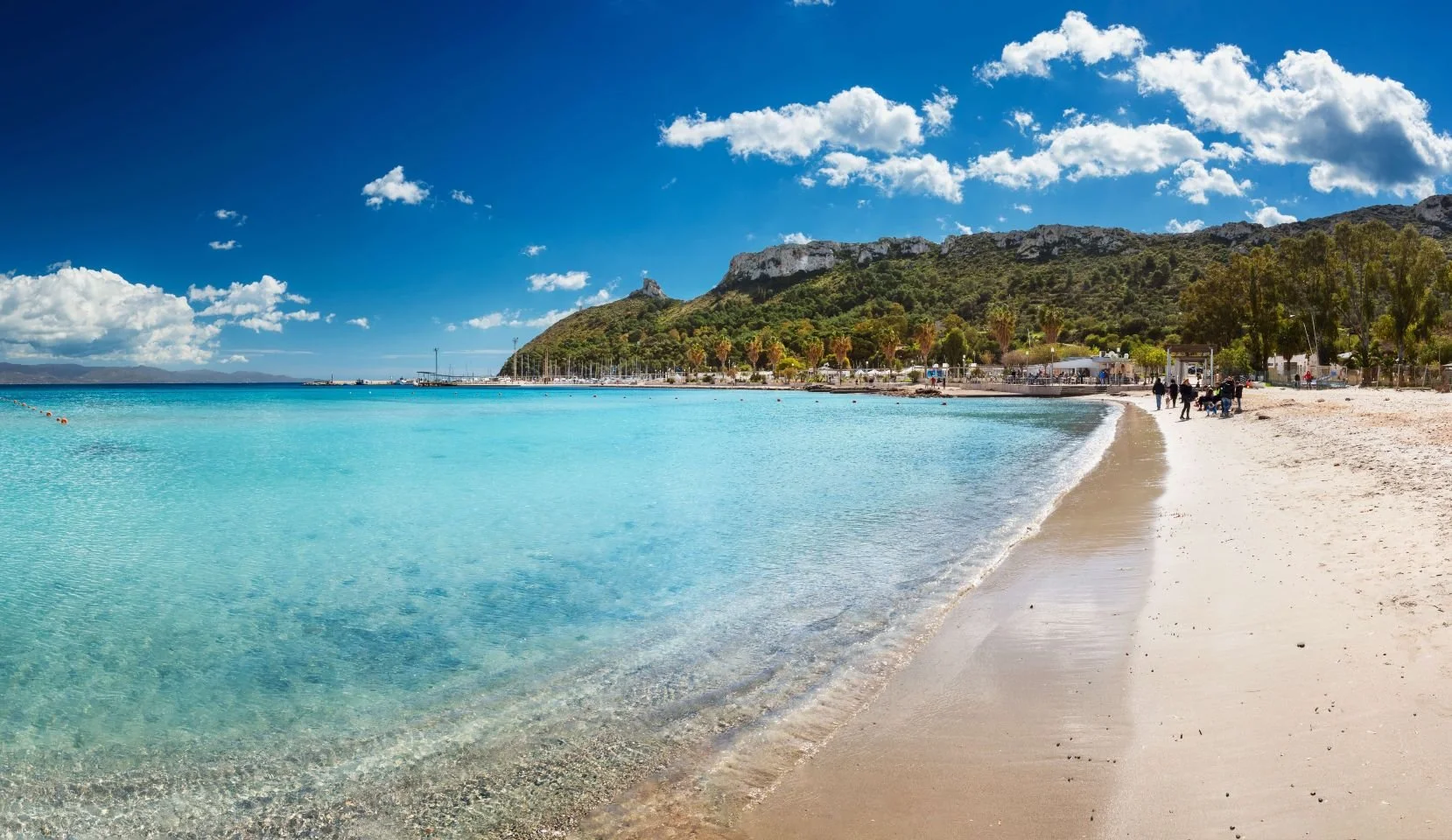
As Palma de Mallorca prices reach €5,500 per square metre and upward, its historic twin offers similar history, superior yields and a fraction of the entry cost — with catalysts that will not last
In the winter of 1921, D.H. Lawrence arrived in Cagliari by sea and was stopped short. “The city piles up lofty and almost miniature,” he wrote. A century later, that observation carries fresh resonance — not for literature, but for capital.
Cagliari and Palma de Mallorca — two island capitals shaped by the same Aragonese crown — have arrived at a moment of striking divergence. One is priced as a global luxury market. The other is not. Yet.
The question is whether that gap represents opportunity — or a structural discount that deserves to persist.
This is not a contrarian bet on an obscure market — it is a repricing opportunity grounded in comparable assets and delayed recognition.
I. A Shared Crown, A Divergent Fortune
For more than a century, both Sardinia and Mallorca fell under Aragonese dominion. Both capitals were fortified hilltop cities commanding strategic gulfs. Their architecture remains strikingly parallel.
The divergence that followed was not structural — it was marketing. Mallorca was industrialised as a destination. Cagliari was not.
That asymmetry is now reversing.
II. The Benchmark: Price Per Square Metre
At €5,400+ per square metre, Palma is fully priced. At €2,687, Cagliari is not. The differential exceeds 100%.
Yet both cities offer comparable climate, coastline, and historical depth. The premium in Palma reflects brand maturity — not asset superiority.
The Palma premium has been bought. The Cagliari discount is still available.
Yield reinforces the case. Cagliari delivers ~5.9% versus ~4.5% in Palma, with materially lower capital deployment.
III. Macroeconomic Context
Italy quietly outperforms Spain on a per-capita basis. Higher household wealth, lower unemployment, and lower inflation create a more stable underlying base.
Tax advantages — including the 21% flat rental tax and renovation incentives — further enhance investor returns.
EU funding directed to Sardinia adds a structural tailwind to infrastructure and property value.
IV. Catalysts
Markets reprice when visibility changes. Palma had tourism. Cagliari is gaining targeted global exposure.
The America’s Cup preliminary regatta introduces high-net-worth visibility, infrastructure investment, and international media attention.
This is not mass tourism — it is signal-driven capital migration.
Tourism growth, particularly international, is accelerating. Repeat visitation patterns suggest future buyer conversion.
V. Market Dynamics
Palma is mature. Cagliari is early-cycle. Transaction volumes are recovering, and international buyers now dominate marginal demand.
Forecast growth of 3–7% annually, combined with higher yields and lower entry prices, produces a superior total-return profile.
VI. Risks
Italy’s debt burden, Sardinia’s demographic decline, and regulatory uncertainty remain material considerations.
Execution risk also exists — markets can remain underpriced longer than expected.
But these risks are visible and largely priced into current valuations.
VII. The Verdict
Cagliari occupies a rare position: not frontier, not mature — but transitional. A high-quality market entering a repricing phase.
Cagliari is buying the Mediterranean at a two-for-one discount.
Palma in 1980 was a known quantity building toward its peak. Cagliari in 2026 is beginning that ascent.
The investor who waits for confirmation pays the premium. The investor who moves now captures the gap.
The gap is not permanent. It is a lag.